
The Russian government procurement market with a volume of 10 trillion rubles ($110 billion) per year purchases thousands of product categories. But not all of them are equally accessible to Chinese manufacturers. Some products require specific certificates, long preparation, and large capital investments. Others — on the contrary — have a low entry barrier, high demand, and stable margins.
Analyzing data from the Unified Information System for Government Procurement (zakupki.gov.ru) for 2024-2025, we identified five product categories where demand is maximum, competition is manageable, and Chinese companies dominate. These are products with which you can enter quickly, win your first tenders, and scale up.
1. Medical Equipment and Consumables
Market volume in government procurement: ~500 billion rubles ($5.5 billion) per year
Number of tenders: 15,000+ per year
Average contract size: 500 thousand — 50 million rubles ($5.5K — $550K)
Share of Chinese goods: 60-70%
Russian healthcare actively purchases equipment and consumables. After the departure of Western brands (Siemens, Philips, GE partially left or restricted supplies), a huge niche has formed, which Chinese manufacturers are filling.
What is most frequently purchased:
Diagnostic equipment: ultrasound machines, ECG, X-ray machines, MRI (budget segment). Average tender price: 2-20 million rubles ($22-220K). Chinese brands: Mindray, Edan, Sonoscape.
Laboratory equipment: blood analyzers, biochemical analyzers, microscopes, centrifuges. Average price: 500 thousand — 5 million rubles ($5.5-55K). Brands: Dirui, Goldsite, Rayto.
Consumables: syringes, gloves, masks, shoe covers, gowns, disposable instruments. Huge volumes, low margin (10-20%), but stable demand. Tenders for 500 thousand — 10 million rubles ($5.5-110K).
Medical furniture: beds, couches, operating tables, cabinets. Average price: 1-5 million rubles ($11-55K).
Why this is profitable:
Demand is stable and predictable. Hospitals and clinics purchase equipment according to annual plans. Certification exists for almost all major Chinese manufacturers (Roszdravnadzor registration certificate). Competition with Western brands is gone, leaving competition within Chinese manufacturers.
Margin: 20-40% for equipment, 10-20% for consumables. Entry barrier: medium — equipment registration with Roszdravnadzor is required (6-12 months, cost $5-15K), but many Chinese brands are already registered.
Case study: A company from Shenzhen manufacturing ultrasound machines won 12 tenders in a year totaling 180 million rubles ($2 million). Average margin 28%. Worked through a Russian intermediary (10% commission), but still earned $500K in net profit.
2. IT Equipment and Office Technology
Market volume: ~400 billion rubles ($4.4 billion) per year
Number of tenders: 20,000+ per year
Average size: 300 thousand — 30 million rubles ($3.3K — $330K)
Share of Chinese goods: 50-60%
Government bodies, schools, hospitals, universities, the army — everyone purchases computers, laptops, printers, servers, and network equipment. The volumes are huge, demand is year-round.
What is purchased:
Personal computers (PCs) and laptops: Tenders for 100-500 units. Average price: 30-50 thousand rubles ($330-550) per PC, 40-80 thousand ($440-880) per laptop. Popular brands: Lenovo (manufactured in China), Acer, Asus, Chinese no-names under Russian brands (Aquarius, IRU).
Servers and storage systems (SAN/NAS): For government institutions that need local servers. Average tender price: 2-20 million rubles ($22-220K). Brands: Huawei (restricted by sanctions, but supplied through gray schemes), Inspur, Sugon.
Printers, MFPs, scanners: Office equipment. Tenders for 10-200 units. Average price: 10-30 thousand rubles ($110-330) per unit. Brands: HP (assembled in China), Canon, Pantum (Chinese brand).
Network equipment: Routers, switches, Wi-Fi access points. Average tender price: 500 thousand — 10 million rubles ($5.5-110K). Brands: Huawei (restricted), TP-Link, D-Link, H3C.
Why this is profitable:
Huge number of tenders. Every day 50-100 new IT equipment procurements are published. Entry barrier is low: most goods don’t require complex certification (a declaration of conformity to TR CU is sufficient, which can be obtained for $500-1000 in 2-4 weeks).
Competition is high, but price is the main factor. If you have direct supplies from the factory, bypassing intermediaries, you can dump prices and win 30-50% of tenders.
Margin: 15-25% (lower than for medical equipment, but compensated by volumes). Turnover is fast: from contract signing to receiving payment — 1.5-3 months.
Pitfalls: Sanctions. Some Chinese brands (Huawei, ZTE) have been sanctioned by the USA, which limited their direct supplies to Russian government institutions (especially law enforcement agencies). But through Russian intermediaries and rebranding, goods are still sold.
Case study: A laptop distributor from Guangzhou won tenders for 80 million rubles ($880K) in a year, supplying 1,500 laptops to schools and universities. Purchase price $300 per laptop, sale $480, margin $180 × 1,500 = $270K. Minus logistics, customs, intermediary commission — net profit $150K.
3. LED Lighting and Lighting Equipment
Market volume: ~150 billion rubles ($1.65 billion) per year
Number of tenders: 8,000+ per year
Average size: 500 thousand — 15 million rubles ($5.5K — $165K)
Share of Chinese goods: 80-90%
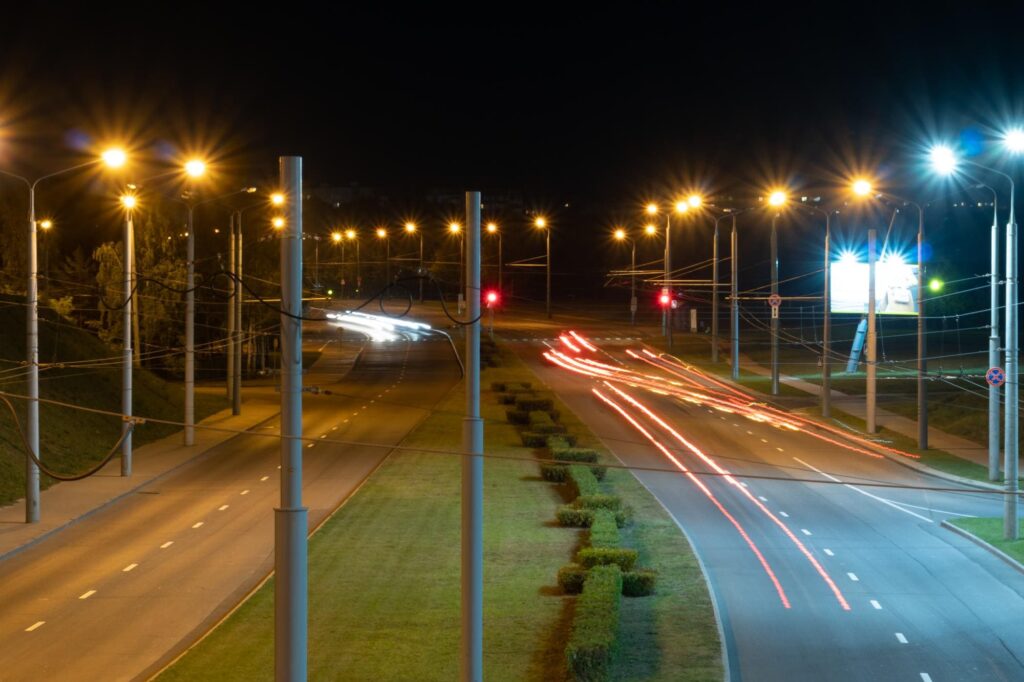
Russia is massively transitioning to LED lighting. Street lamps, road lighting, schools, hospitals, offices, parks — everywhere old lamps are being replaced with LEDs. This is an energy-saving program funded from the budget.
What is purchased:
Street LED fixtures: For roads, parks, courtyards. Power 50-150W. Average price: 5-15 thousand rubles ($55-165) per fixture. Tenders for 100-1,000 units.
Indoor fixtures: Office, school, hospital (ceiling, recessed, surface-mounted). Price: 1-5 thousand rubles ($11-55) per unit. Huge volumes.
Floodlights and architectural lighting: For buildings, monuments, facades. Average price: 3-20 thousand rubles ($33-220).
LED lamps: Replacement for regular light bulbs. Mass purchases of 1,000-10,000 pieces. Price: 100-500 rubles ($1.1-5.5) per lamp.
Why this is profitable:
China is the world leader in LED production. 90% of all LEDs are made in China. There are almost no Russian manufacturers (there are assembly plants using Chinese components). Competition is within Chinese brands, but the market is huge, there’s enough for everyone.
Certification is simple: declaration of conformity to TR CU ($500-1,500, 2-4 weeks), sometimes a fire certificate is required (additional $500-1,000). Preparation time for the first tender — 1-2 months.
Margin: 30-50% (fixtures are a good-margin product). Logistics is simple (fixtures are light, don’t require special conditions).
Pitfalls: Quality. Russian customers often check light output, service life, light pulsation. If the product doesn’t meet the declared characteristics — refusal of acceptance, penalties, return. Work only with verified Chinese factories that provide real parameters.
Case study: A street lighting manufacturer from Zhongshan won a tender for 50 million rubles ($550K) to supply 5,000 fixtures. Purchase price $60 per fixture, sale $110, margin $50 × 5,000 = $250K. Minus expenses — net profit $150K for one contract.
4. Furniture (Office, School, Medical)
Market volume: ~200 billion rubles ($2.2 billion) per year
Number of tenders: 10,000+ per year
Average size: 500 thousand — 20 million rubles ($5.5K — $220K)
Share of Chinese goods: 40-50%
Government institutions constantly update furniture. Schools purchase desks and chairs, offices — tables and armchairs, hospitals — medical couches and cabinets. Demand is stable, volumes are large.
What is purchased:
Office furniture: Desks, armchairs, shelving units, cabinets. Average price: desk 5-15 thousand rubles ($55-165), armchair 3-10 thousand ($33-110). Tenders for 50-500 units.
School furniture: Student desks, chairs, boards, cabinets. Huge volumes (thousands of desks). Average price: desk 3-7 thousand rubles ($33-77), chair 1-3 thousand ($11-33).
Medical furniture: Couches, beds, tables, instrument cabinets. Average price: couch 10-30 thousand rubles ($110-330), bed 20-60 thousand ($220-660).
Kindergarten furniture: Tables, chairs, beds, lockers. Mass purchases.
Why this is profitable:
Furniture is a product with high added value. The purchase price in China is 2-3 times lower than the retail price in Russia. For example, an office chair at a factory costs $30, in Russia it sells for $100-110. Margin is 50-70% before logistics and customs, 30-40% after all expenses.
Certification is simple: TR CU declaration, sometimes a fire certificate. Preparation time: 1-2 months. Logistics: furniture is bulky but not heavy. One container holds 200-300 chairs or 100-150 desks. Delivery cost $3,000-5,000 per container.
Pitfalls: Competition with Russian and Belarusian manufacturers. Russian furniture often wins in tenders due to preferences (some customers give priority to domestic goods). But Chinese furniture is 20-30% cheaper, which compensates for the lack of preferences.
Case study: An office furniture manufacturer from Foshan won a tender for 15 million rubles ($165K) to supply 500 desks and 800 armchairs. Purchase price $40 per desk, $30 per armchair. Sale $90 per desk, $70 per armchair. Margin: ($50 × 500) + ($40 × 800) = $57K. Minus expenses — net profit $35K.
5. Construction Materials and Finishing

Market volume: ~800 billion rubles ($8.8 billion) per year
Number of tenders: 15,000+ per year
Average size: 1-100 million rubles ($11K — $1.1M)
Share of Chinese goods: 30-40%
Government institutions build and renovate buildings: schools, hospitals, administrative buildings, roads. They purchase doors, windows, linoleum, tiles, paints, plumbing, cables, pipes — everything needed for construction and renovation.
What is purchased:
Doors and windows: PVC windows, metal doors, fire doors. Average price: window 10-30 thousand rubles ($110-330), door 5-40 thousand ($55-440). Tenders for 50-500 units.
Floor coverings: Linoleum, laminate, tiles. Mass purchases (thousands of square meters). Average price: linoleum 300-800 rubles/m² ($3.3-8.8), laminate 500-1,500 rubles/m² ($5.5-16.5).
Plumbing: Toilets, sinks, faucets, pipes. Average price: toilet 3-10 thousand rubles ($33-110), sink 2-7 thousand ($22-77).
Cables and wires: For electrical installation. Huge volumes (kilometers). Average price: 50-300 rubles/meter ($0.55-3.3).
Paint and coating materials: Paints, enamels, primers. Tenders for hundreds of liters/kilograms.
Why this is profitable:
The construction market is one of the largest in government procurement. Tenders run year-round, volumes are large. Chinese construction materials are 20-40% cheaper than Russian and European ones, which gives a competitive advantage.
Margin: 20-40% depending on the product. Doors and windows are high-margin (30-40%), cables and pipes are low-margin (15-25%), but volumes compensate.
Pitfalls: Complex certification. Many construction materials require fire certificates, sanitary-epidemiological conclusions, strength certificates. Time to obtain: 1-3 months, cost $1,000-5,000. But this is done once, then the certificate is valid for 3-5 years.
Logistics: construction materials are heavy and bulky. Delivery is expensive. One container of doors weighs 10-15 tons, delivery cost $4,000-6,000.
Case study: A PVC window manufacturer from Linyi won a tender for 30 million rubles ($330K) to supply 600 windows for schools. Purchase price $200 per window, sale $550, margin $350 × 600 = $210K. Minus logistics ($30K), customs ($40K), intermediary commission ($33K) — net profit $107K.
Bonus: Products with Growing Demand (Promising Niches)
Besides the top 5, there are categories where demand is growing faster than the market:
Video surveillance and security systems: Cameras, video recorders, intercoms. Demand +40% year over year. Chinese brands (Hikvision, Dahua) dominate.
Energy-saving equipment: Solar panels, inverters, smart home systems. The niche is small but growing +50% per year.
Sports equipment: Exercise machines, equipment for schools and gyms. Demand is stable, competition is low.
How to Choose Your Niche
When choosing a product for participation in government procurement, consider:
Your capabilities: What do you manufacture or can you supply? Do you have experience working with this product?
Entry barrier: How much does certification cost? How much time for preparation? The lower the barrier — the faster the start.
Margin: Calculate the full cost (product + logistics + customs + certification). Minimum acceptable margin is 15-20%.
Market volume: How many tenders are published per month? The more — the more stable the order flow.
Competition: Study who wins the tenders. If 90% are won by Russian companies — it’s hard to compete. If 50%+ are Chinese goods — the market is open.
Start with one category. Win 2-3 tenders, gain experience, fine-tune your processes. Then scale up: add new products, increase volumes, register your own LLC to reduce commissions.
The Russian government procurement market is not a lottery. It’s a predictable system where those who correctly calculate the economics, follow the rules, and are not afraid of competition win.