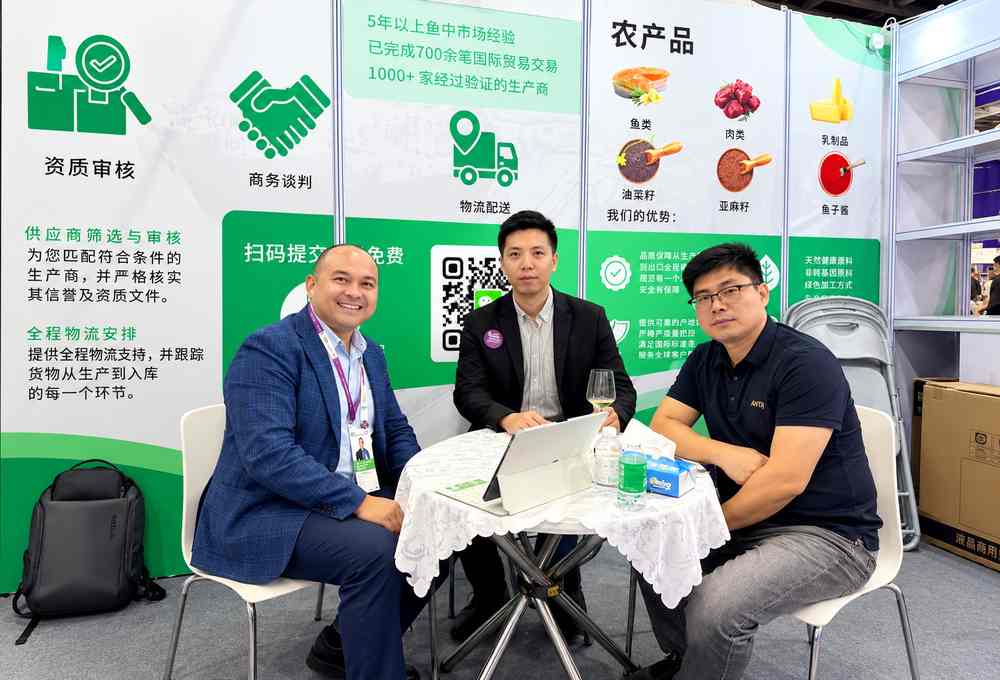
When a manufacturer decides to participate in a trade show in Russia or the CIS countries for the first time, the most important step is to prepare a budget and calculate all expenses. Prospective exhibitors usually focus on the cost of exhibition space, stand construction, and registration fees.
However, the total cost of participating in a trade show is almost never equal to the cost of the stand itself. For small and medium-sized businesses, the lion’s share of expenses goes toward other activities.
Team Travel Expenses.
Suppose two employees are sent to attend a trade show. Organizing their trip requires paying for flights, hotel accommodation, transfers, meals, communications, insurance, and travel allowances.
But there are also hidden costs! These include several working days of the business owner, commercial director, or export manager. While they are working at the exhibition, their everyday responsibilities do not disappear.
Professional Interpreter Fees.
Basic Russian-to-Chinese translation or communication through a translation app is often insufficient. A specialist working at the stand must have a good understanding of industry terminology and the product itself, be able to distinguish a genuine buyer from a casual visitor, and know how to ask the right questions about the company, purchasing volumes, sales channels, and the next steps after the initial introduction.
Third, there are contractor management expenses, ranging from coordination with exhibition organizers and the development of promotional materials to stand installation and sample delivery.
Shipping Product Samples to the Exhibition.
It is important to understand that transporting commercial goods and shipping exhibition samples are two different tasks. Companies must carefully research and prepare for which products can be imported, what documents are required, when the shipment must arrive, where the products will be stored before the event, and what should happen to them afterward.
If samples are shipped back after the exhibition, the company pays for logistics twice. If the samples are left with the organizer or disposed of, the company loses an asset that could have continued supporting promotion and sales.
Product Localization for the Local Language and Market Perception.
If a brochure is translated into Russian using an online translation tool, it rarely becomes an effective commercial document for a Russian audience.
The brochure should contain information useful to a potential partner or buyer. This typically includes clear product specifications, packaging, minimum order quantity (MOQ), export price, country of origin, certificates, delivery terms, and contact details through a familiar communication channel.
Insufficient Flow of Targeted Meetings.
Three days of work at a trade show, numerous meetings, and conversations with hundreds of people may produce no results and generate no sales. Everything depends on how many people in the visitor flow are actually ready to purchase the product. Therefore, the business cards collected must be categorized immediately.
If contacts are not qualified as soon as they are collected at the stand, the number of business cards becomes an almost meaningless metric.
Losing Contacts After Returning Home from the Exhibition.
This type of loss is the most expensive for a company because it is not visible in the event’s overall budget. After returning from the exhibition, the team resumes its regular tasks and responsibilities. The business cards collected over three days remain in folders, while the second contact with potential buyers is postponed.
Just a couple of weeks later, the importer may already be communicating with other suppliers, having forgotten about your company and its excellent product.
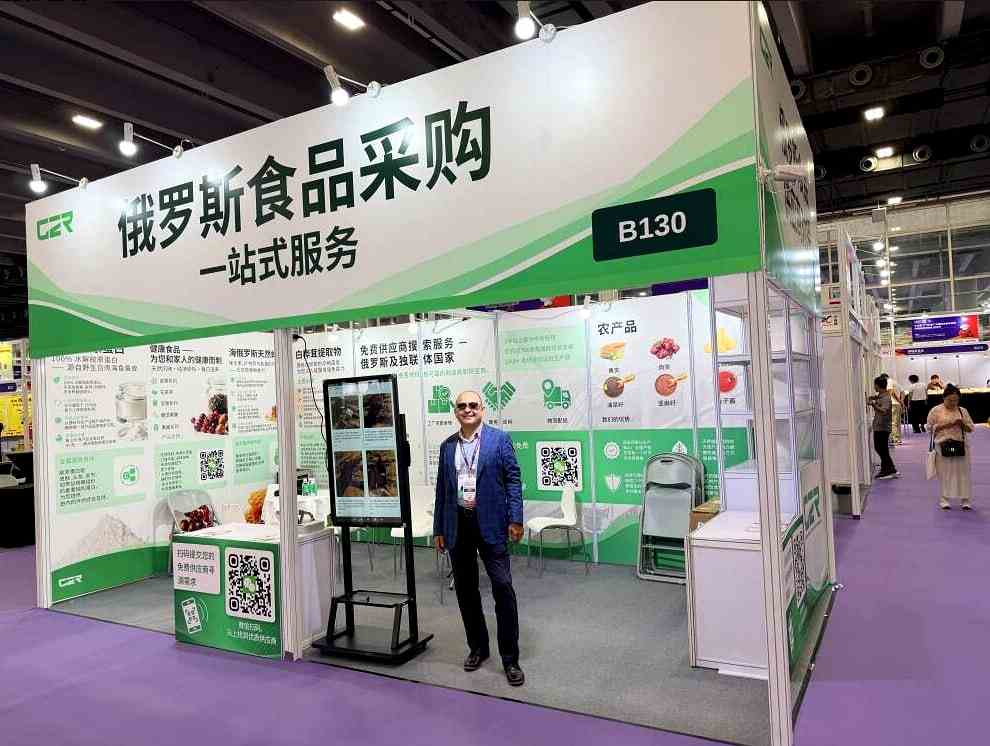
How Does Working at a G2R Shared Stand Change the Entire Economics of Product Promotion at Trade Shows?
A shared exhibition stand offers several benefits and advantages for small and medium-sized businesses. The concept is that several manufacturers use the same exhibition infrastructure. Each company receives its own product presentation to potential partners, while all costs are shared among participants.
Common shared expenses often include exhibition space, a meeting area, a reception counter, a screen, stand personnel, interpretation, printing, photography and video production, basic logistics, and administration.
Another important advantage of a shared stand in Russia is the opportunity to organize the entire process through G2R’s local Russian team. The platform’s operator in Russia, AsiaExpert LLC (ООО «АзияЭксперт»), works together with the Chinese company GUANGZHOU SEVEN WINDS INTERNATIONAL TRADE CO., LTD. This cooperation makes it possible to order and coordinate services locally and work with organizers and contractors without a long chain of intermediaries.
The budget savings are obvious! There is no need to send the entire team on a business trip to Russia. Even before booking a shared exhibition stand, we check the rules of the specific trade show and arrange participation through the local team at events where this is permitted.
The Chinese company only needs to provide the G2R team with product samples, presentations, product information materials, commercial terms, and the questions that should be asked of potential buyers or partners.
The local Russian team studies the product and organizes its presentation at the exhibition, collects contacts, records inquiries, and prepares photo and video reports.
If a strategically important buyer appears at the exhibition, a representative of your company can join the negotiations online via video call. Face-to-face participation may still be required later, but at that point, it will involve specific negotiations potentially leading to a contract. This is precisely when a personal visit to Russia has real commercial value. It is more logical and less expensive than sending the entire team.
It is worth noting that the main savings begin after the exhibition. Let’s consider two scenarios.
Scenario A.
You travel to Russia for a trade show, work there for three days, and collect around 40 business cards from various Chinese companies. You have to take the remaining product samples back with you. Only two weeks later do you begin processing the collected contacts and sending emails.
At this point, one buyer requests a sample, and you need to ship it to Russia again. Another buyer asks for a product presentation in Russian, but you do not have one ready and need time to prepare it.
A third buyer wants to negotiate through the national messaging app MAX, but your manager does not have an account on the platform. Meanwhile, a fourth buyer does not respond to emails.
Scenario B.
After the exhibition, your product samples remain in Russia. The contacts have already been categorized, and follow-up activities begin the very next day.
An interested distributor receives a sample immediately through domestic shipping within Russia or delivery to a CIS country, since all samples are stored in a warehouse in Russia. The local team forwards incoming commercial inquiries to the manufacturer and helps continue negotiations.
At the same time, the search for potential buyers expands beyond the exhibition. In this scenario, the stand stops being merely a marketing expense and becomes a source of leads for the sales funnel.
What Does a Shared Exhibition Stand Include?
At the «before the exhibition» stage: Event selection → Product analysis → Localization → Preparation of materials → Sample delivery.
During the exhibition: Product presentation → Lead qualification → Collection of inquiries → Meetings → Photo/video reporting.
After the exhibition: Follow-up → Sample storage → Local shipping → Search for additional buyers → Negotiations → Deal support → WeChat and other Chinese promotional channels.
This comprehensive approach to exhibition activities cannot be evaluated solely by the price per square meter.
The main question is: «What will my company have left 30 days after the exhibition ends?»
If your answer is photographs of the stand and a stack of business cards, participation may have been inexpensive, but not necessarily effective.
If your answer is qualified contacts, sample requests, ongoing negotiations, and a clear sales pipeline, then the exhibition has become part of your export sales process.
How Does G2R Help Manufacturers Participate in Trade Shows in Russia Through a Shared Stand?
If you want to compare independent participation in a trade show in Russia with a shared exhibition format, send us the name of the exhibition or information about your product.
We will prepare a cost breakdown and propose a shared participation format through our local team, without requiring employees to travel. If a particular exhibition requires an official representative to attend in person, we will inform you before booking.
Previously on This Topic:
How to Start Selling Right at a Trade Show in Russia? G2R Platform’s Export Case Study at FOOD2CHINA