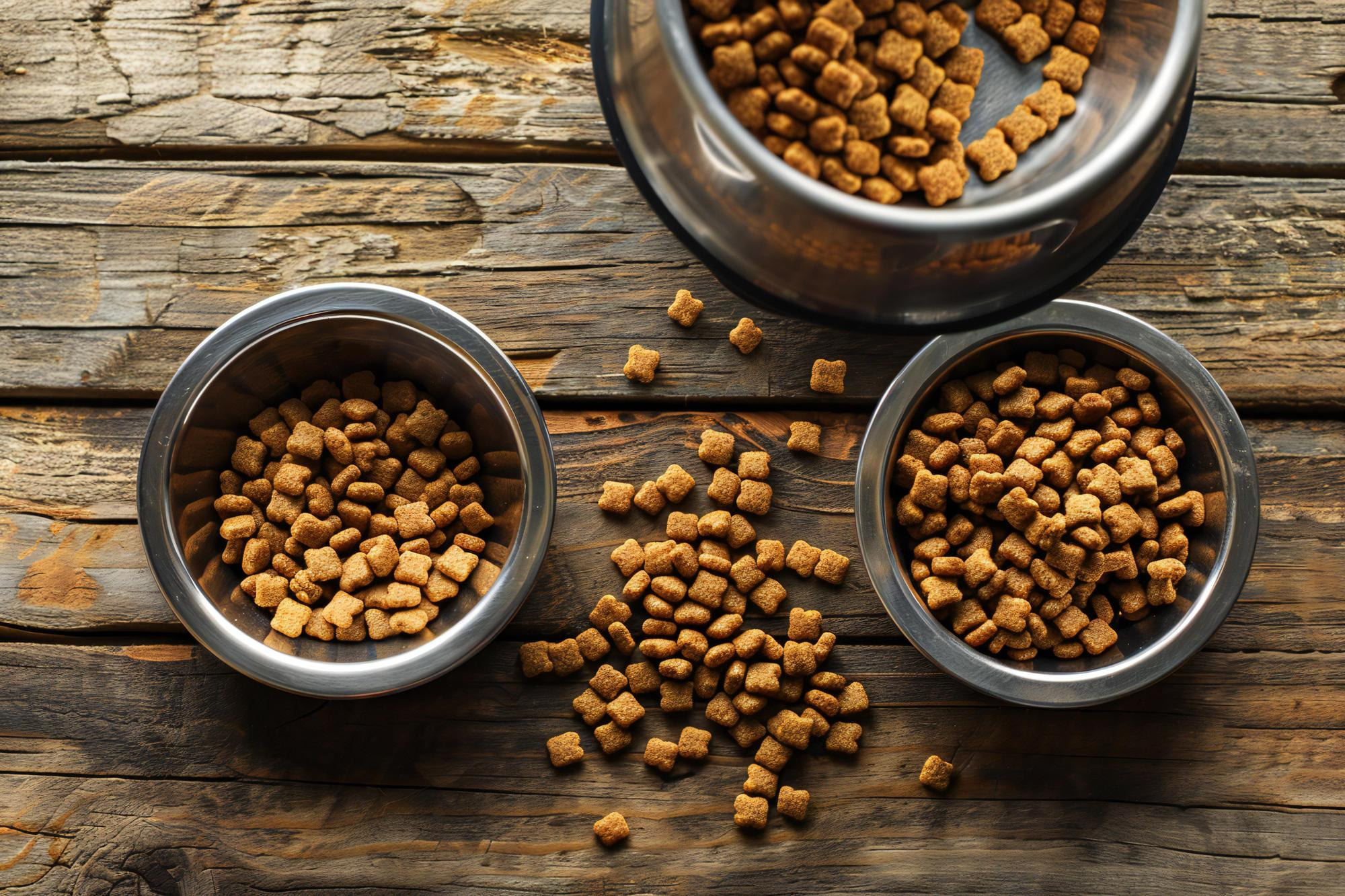
Just five years ago, Russian pet food was perceived as a product for domestic consumption only. Pet store shelves were filled with packaging from German, American, and Italian brands. Today the situation has changed so dramatically that one can rightfully speak of an entirely new export niche.
Russia has joined the ranks of the largest producers of dog and cat food. Factories that were built to substitute imports are now working for export. Buyers from Belarus, Kazakhstan, and countries across the Middle East are taking a close look at Russian products — and finding them quite competitive. In 2025, export revenues broke an all-time record.
If you are looking for a reliable supplier of pet food or are considering investing in this industry, understanding what is happening in the Russian market right now will be of great benefit to you.
The Russian Pet Food Market: Volume and Dynamics
Every other Russian family owns a cat or a dog. That amounts to approximately 53 million cats and 26 million dogs — third and fourth place in the world, respectively. Since 2020, the number of pets in the country has increased by 11%. All of these animals need to be fed, and more and more owners are choosing ready-made diets instead of homemade food.
At the end of 2025, the volume of the Russian pet food market is estimated at 620–700 billion rubles. Production grew to 1.689 million tonnes — 8.4% more than in 2024. Growth has been sustained for several consecutive years: from 2019 to 2025, output increased by more than 60%.
These figures became possible for several reasons. After 2022, some Western brands left the market or reduced their supplies. The availability of imported, well-known branded cat and dog food declined. Russian manufacturers seized the moment and ramped up capacity.
At the same time, imports shrank to a minimum. While in 2021 the country imported 152,000 tonnes of pet food, by 2025 that figure had fallen to just 53,000 tonnes. The import share dropped to 3.6% of the market. In practical terms, Russia now nearly entirely provides for itself in cat and dog food.
However, the issue is not only about import substitution. Russian pet owners have become more conscious about their animals’ nutrition. Around 86% of cat owners and more than 60% of dog owners choose food based on its ingredients rather than price alone. Moreover, 86% of owners consider their pets to be family members. This is pushing manufacturers to develop premium product lines.
Advantages of Russian Pet Food: Raw Material Base and Quality
The main trump card of Russian manufacturers is access to raw materials. Russia is one of the largest producers of poultry meat, pork, and beef in the world. This means a stable supply of the primary ingredient for pet food, with no dependence on imports or currency fluctuations.
Large agricultural holdings have gone even further. Some use their own meat to produce pet food — vertical integration from field to packaging. In September 2025, one such holding launched the largest wet food factory in the Republic of Mordovia, with a capacity of 80,000 tonnes per year. The investment exceeded 5 billion rubles. This approach provides control over quality at every stage of production.
As for quality itself — the Russian market is undergoing serious transformation. Not long ago, domestic pet food was associated with the budget segment. The situation is now different: super-premium occupies the largest share of the market in monetary terms — approximately 313 billion rubles.
Quality control is ensured by several systems. Rosselkhoznadzor is responsible for veterinary safety. From 2024–2025, mandatory labelling through the «Chestny Znak» («Fair Mark») system was introduced — first for dry food, then for wet food. This increases market transparency and filters out counterfeit goods, which previously accounted for up to 15% of the market.
The variety of products deserves separate mention. Russian manufacturers have mastered the production of pet food in various formats and price categories: from budget dry diets to holistic food with high meat content. Specialised product lines have also emerged — for sterilised animals, for pets with sensitive digestion, and for different breeds and age groups.
Of course, not everything is perfect. Manufacturers still depend on imports of certain components: vitamins, amino acids, and some additives. China remains the primary supplier of these ingredients. However, the basic requirements — meat, grains, and vegetable components — are covered by domestic production.
Types of Pet Food: Dry, Wet, and Treats
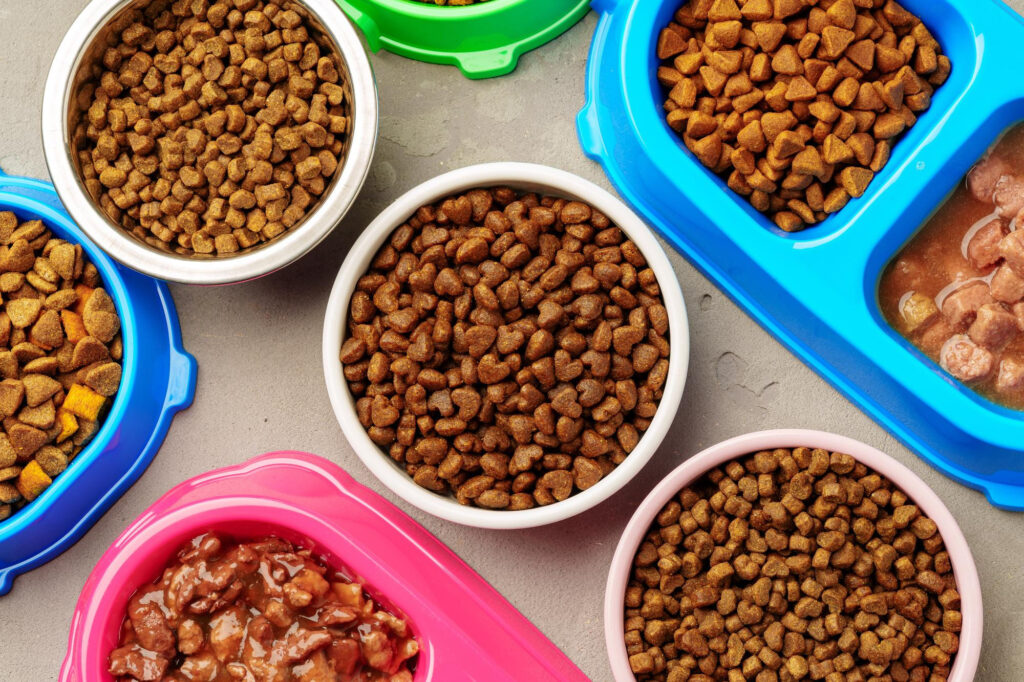
Russian manufacturers produce all the main pet food formats that are in demand on the global market.
Dry food showed the highest growth rates in 2025 — production increased by 13% and reached 893,800 tonnes. This is the foundational product for most owners: easy to store, easy to portion, and relatively inexpensive per serving. Russian factories have mastered the production of dry diets across all price segments — from economy class to holistic food with a meat content of up to 70%.
Wet food is the second major category, encompassing pouches (single-serving packets), canned food in tins, and pâtés. Wet food is especially popular among cat owners: it accounts for more than 54% of the total volume of cat food in Russia. Production of this format is actively growing. Leading manufacturers are increasing their capacities to 65,000–80,000 tonnes.
Treats and snacks are a relatively small but fast-growing category, including dried ears, tendons, meat sticks, and dental bones. This segment is interesting because it is easier for smaller manufacturers to enter: raw materials are accessible, the technology is not complex, and demand is stable.
By price segment, the picture is as follows. Super-premium leads in monetary terms, although economy class dominates by physical volume. The premium segment is growing fastest — owners are willing to pay more for quality ingredients but cannot always afford the most expensive brands.
Veterinary diets are a separate matter entirely. After the departure of European brands, this segment found itself in short supply. Owners of animals with urolithiasis, allergies, and diabetes struggled to find their usual foods. Russian manufacturers have begun to fill this niche, although not completely as yet. There is an opportunity here for foreign investors to launch specialised production facilities.
Production Regions and Major Factories
The geographic distribution of pet food production in Russia is uneven. The absolute leader is the Central Federal District, which accounts for more than 70% of all output. This is understandable: proximity to the main sales markets, well-developed logistics, and the concentration of meat-processing enterprises. The Siberian Federal District comes second — around 15% of production. The remaining regions contribute less, although new factories continue to appear in various parts of the country.
Who produces pet food? Three categories of players operate in the market.
Localised international companies. According to 2025 data, the three best-selling brands each hold between 15% and 18% of the market. However, the share of Russian brands is growing — by 2025 they had already captured 50% of production volume.
Large Russian agricultural holdings. The industry leader is developing pet food production as a separate line of business. The company produces wet food at a factory in central Russia. Another manufacturer, in 2025, launched a factory with an investment of more than 5 billion rubles and a wet food production capacity of 80,000 tonnes per year.
Specialised pet food manufacturers — companies for which pet food is their core business.
In total, more than 345 enterprises producing pet food for domestic animals operate in Russia. More than 550 manufacturers are registered in the «Chestny Znak» system.
Export of Russian Pet Food: Where and How Much
For a long time, Russian cat and dog food was produced exclusively for the domestic market. Exports, if they existed at all, were purely symbolic. Now the situation has changed fundamentally.
In 2025, Russia set an all-time record: exports of pet food amounted to 106,000 tonnes, worth 256 million dollars. This is 23% more in monetary terms than in 2024. The previous record — 227 million dollars in 2021 — has been surpassed.
Where does Russian pet food go? The main buyer is Belarus. In 2025, the country purchased approximately 54,000 tonnes worth 176 million dollars — nearly 70% of total export revenue. Next come:
- Kazakhstan — 48 million dollars
- Uzbekistan — more than 9.4 million dollars
- Kyrgyzstan — more than 6.4 million dollars
- Azerbaijan — more than 5.7 million dollars
The geographic footprint is expanding. In 2025, Russia began exporting pet food to Qatar, Iraq, Jordan, and Bangladesh for the first time. Exports to Hong Kong, which had been suspended since 2021, were also resumed. The Middle East is becoming a promising new direction.
According to forecasts from Agroexport, by 2030 exports could reach 200,000 tonnes — nearly double the current figures.
Why is Russian pet food competitive in foreign markets?
- Relatively low production costs due to accessible raw materials
- An established full-cycle manufacturing base
- The ability to produce goods under foreign buyers’ private labels (OEM)
- Geographic proximity to the markets of Central Asia and the Middle East
However, there are also barriers. Russian brands are virtually unknown abroad. Entering new markets requires investment in marketing, certification, and packaging adaptation — and not all manufacturers are ready for this. The G2R platform helps foreign buyers identify verified and reliable suppliers of high-quality pet food. The service also handles matters related to payment and delivery of goods. To place an order, select the relevant product card and submit an application.
China as a Promising Sales Market
The Chinese pet food market is one of the fastest-growing in the world, and it holds particular appeal for Russian exporters.
The figures are impressive. The market volume in 2024 is estimated at 11.5 billion dollars. By 2029, growth to 18.7 billion dollars is projected — an average annual rate of approximately 10%. This is significantly faster than in Europe or North America, where markets are already saturated.
Demand is high, as nearly 70 million cats and more than 50 million dogs live in Chinese cities. Moreover, the culture of pet ownership here is relatively new — the boom began over the past decade. Young urban residents, especially those living alone, keep pets as companions and are willing to spend serious money on them.
The average expenditure of a Chinese pet owner on food is comparable to that of an American — approximately 300–400 dollars per year per pet. At the same time, there is a pronounced trend toward premiumisation: buyers choose quality imported food and are willing to pay for natural ingredients and well-known brands.
An interesting feature of the Chinese market is the dominance of online sales. Around 90% of pet goods are sold via the internet: Tmall, JD.com, Taobao. During sales events such as Singles’ Day (November 11), cat food consistently ranks among the top-selling items. For an exporter, this means that without a presence on marketplaces, reaching the Chinese consumer is very difficult.
Who is currently supplying pet food to China? The leaders are the USA, Canada, and South Korea. Exports from Poland are also developing actively — following the signing of an agreement in 2023. Russia currently occupies a modest position, but the preconditions for growth are in place.
What can a Russian manufacturer offer the Chinese market? First, quality meat raw materials — Chinese consumers value food with high meat content. Second, a competitive price due to low production costs. Third, geographic proximity: shipping from Russia to the northeastern provinces of China is faster and cheaper than from the USA.
However, entering the Chinese market requires serious preparation. Registration with the General Administration of Customs of China (GACC) is needed, along with obtaining a licence from the Ministry of Agriculture and Rural Affairs of China for the import of feed products, and adapting packaging to local requirements. The process is not quick, but it is surmountable — especially with the support of experienced partners.
It is also worth mentioning that China itself is a major producer of pet food. The Nanhe district of Hebei Province is known as the «birthplace of Chinese pet food» — up to 60% of the country’s entire production is concentrated there. Nevertheless, demand for imported products remains high: Chinese consumers trust foreign brands, especially in the premium segment.
Export Requirements and Certification
Dog and cat food is a product subject to oversight by veterinary services. This means that export requires compliance with certain procedures. Let us go through the main steps.
TNVED code 230910 — this is the code under which dog and cat food packaged for retail sale is classified. It is the key code for customs clearance of export batches. If the product is not pre-packaged or is intended for other animals, other codes within group 2309 apply.
Veterinary certificate — a mandatory document for export. It is issued by Rosselkhoznadzor following verification that the product complies with the requirements of the importing country. Without this document, a shipment will not pass customs either in Russia or in the country of destination.
Registration in the «Cerberus» system — the Rosselkhoznadzor information system that maintains a register of enterprises entitled to export controlled products. The manufacturer must be included in this register, and separate accreditation may be required for each country of destination.
«Chestny Znak» labelling — introduced in 2024–2025, first for dry food and then for wet food. For export purposes this is not always critical, but having the labelling increases production transparency and can serve as a persuasive argument in negotiations with foreign partners.
The requirements of specific countries vary.
For EAEU member states (Belarus, Kazakhstan, Armenia, Kyrgyzstan), the procedure is simplified. A unified veterinary space is in effect, with mutual recognition of certificates. It is sufficient to process a veterinary accompanying document in the «Mercury» system.
For China, the requirements are stricter. Enterprise registration with the General Administration of Customs of China (GACC) is required, as is a licence from the Ministry of Agriculture and Rural Affairs of China for the import of feed products. The process of coordinating veterinary certificates between Russia and China is ongoing — for some categories of food it has not yet been completed.
For other countries, requirements must be confirmed on a case-by-case basis. As a rule, a bilateral veterinary certificate agreed between Rosselkhoznadzor and the veterinary service of the importing country is required.
Advice from the G2R platform: before commencing export shipments, it makes sense to contact the regional office of Rosselkhoznadzor or the Agroexport centre under the Ministry of Agriculture. They will help clarify the requirements of a specific country and prepare the necessary documents. If you have any questions, you can contact the G2R team by submitting an application.
Market Prospects and Investment Opportunities
The Russian pet food market is entering a new phase of development. Production is growing faster than consumption, and this creates an interesting situation for investors and international partners.
Production surplus. According to forecasts for 2026, production will grow by 4.8% and reach 1.63 million tonnes. Consumption, meanwhile, will increase by only 1.9% — to 1.5 million tonnes. The surplus will amount to approximately 111,000 tonnes, and by 2029 could reach 178,000 tonnes. This excess is naturally directed toward exports.
Consumption growth will continue. By 2034, the volume of pet food consumption in Russia may increase by one and a half times and reach 2.13 million tonnes. The drivers are clear: the number of pets is growing by 10–15% annually, owners are switching from homemade food to ready-made diets, and the average spend is rising due to premiumisation.
Market consolidation is inevitable. The introduction of mandatory labelling, rising quality requirements, and the need for equipment investment will all hit smaller manufacturers hard. According to some estimates, small factories without automation could lose up to 30% of their volume. Large players will acquire assets, and the market will consolidate. The current production margin is 10–15%, and it is under pressure.
Opportunities for manufacturers and investors:
- Production of specialised food. Veterinary diets and food for animals with special needs — this segment remains undersupplied following the departure of Western brands. A manufacturer that fills this niche will gain a loyal customer base.
- Contract manufacturing. Russian factories can produce goods under the private labels of foreign customers. For international companies, this is a way to obtain a quality product at a competitive price without investing in their own production facilities.
- Supply of ingredients and equipment. Russian manufacturers depend on imports of vitamins, amino acids, and certain additives. An investor who localises the production of these components will find a ready market.
- Development of export infrastructure. Logistics, certification, promotion on foreign marketplaces — there is space here for service companies that can help manufacturers enter international markets.
Risks also exist: dependence on imported components, ruble exchange rate volatility, difficulties with certification in certain countries, and a shortage of personnel for developing new formulations. However, the overall trend is positive: Russia’s pet food industry has passed through its formative stage and is ready for expansion.
Conclusion
Russian dog and cat food is no longer just about import substitution. This is a fully-fledged export industry with clear competitive advantages: accessible raw materials, growing production capacity, and adequate quality. The record export figures of 2025 — 256 million dollars — confirm that Russian products are in demand abroad.
For international buyers, Russia can become a reliable supplier of pet food across different price segments — from economy class to premium products with high meat content. For investors, opportunities are opening up in production, logistics, and related industries.
The market is growing. Capacity is increasing. Exports are gaining momentum — covering not only the EAEU countries but the Middle East as well. Those who enter this industry now have the chance to establish their positions before competition becomes truly fierce.
The G2R platform assists foreign buyers and investors with arranging shipments of dog and cat food. Finding suppliers, payment, logistics, and documentation — none of this is your concern any longer. Submit an application on the product direction card and a personal G2R manager will get in touch with you.