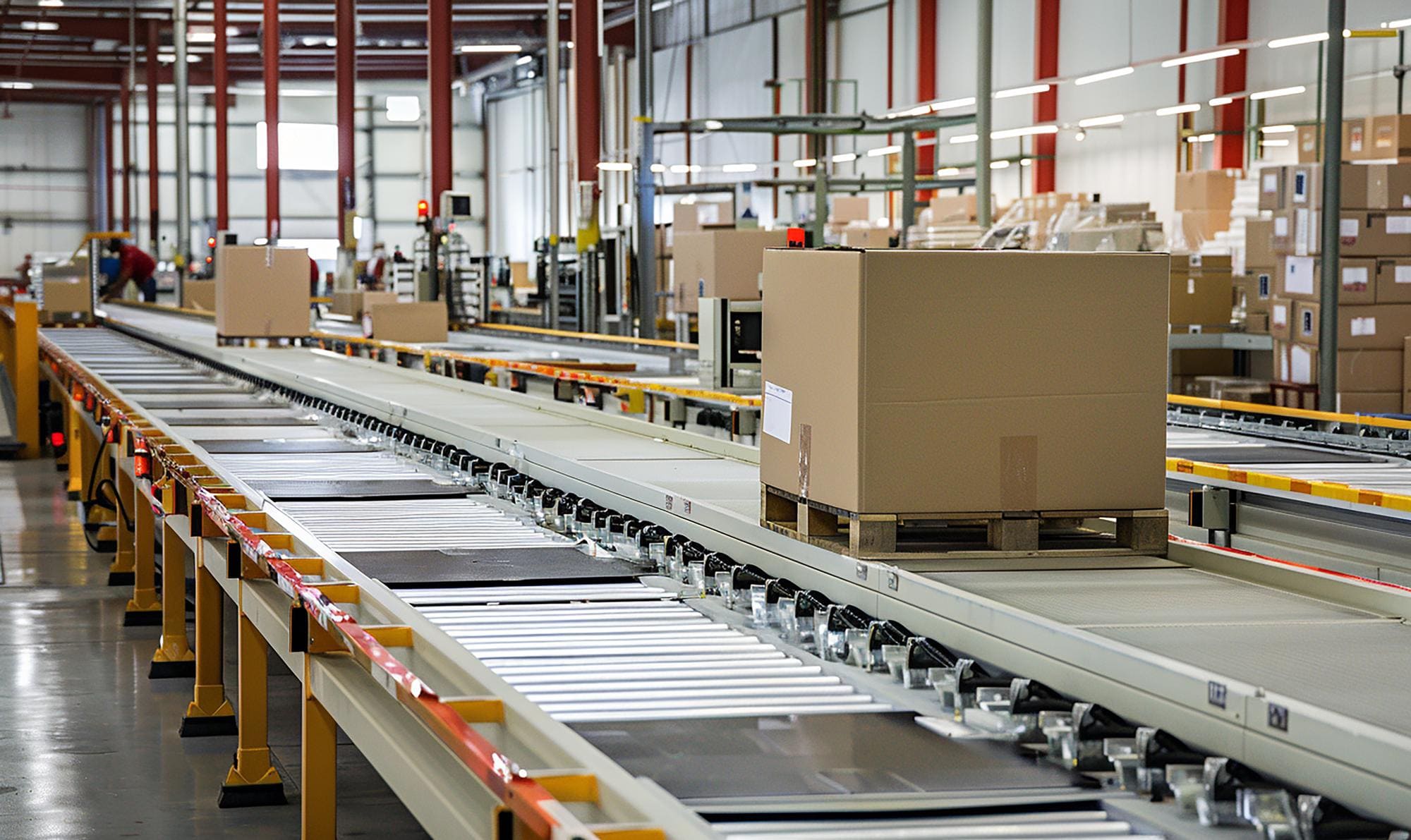
Company: Guangzhou Hengda Packaging Machinery Co., Ltd.
Industry: Manufacturing of automatic packaging lines
Contract: Supply of 12 automatic packaging lines for a petrochemical plant
Amount: 500 million rubles ($5.5 million)
Customer: Large petrochemical company with state participation (procurement under 223-FZ)
Implementation period: 14 months (from tender participation to receiving payment)
Result: Contract completed, net profit $850 thousand (15.5%)
This is a story about how a medium-sized Chinese company with no experience working in Russia won a multi-million dollar contract from a state corporation, outcompeting European and Russian competitors. We break down the entire journey step by step — from first contact to receiving the money.
Background: Who, What, and Why
Guangzhou Hengda is a medium-sized company from the industrial district of Guangzhou. Founded in 2010, specializing in automatic packaging lines for the chemical, food, and pharmaceutical industries. Staff of 120 people, turnover $15 million per year. They exported to Southeast Asian countries, the Middle East, and a bit to Africa. They knew little about Russia and had no work experience there.
In early 2023, CEO Wang Jianhua was at an industry exhibition in Shanghai, where he met a representative of G2R Market. The conversation was simple: «We have access to Russian tenders. Your equipment is in demand there. The departure of Western suppliers has created a niche. Want to try?»
Wang was skeptical. Russia seemed distant, incomprehensible, with sanctions and complex bureaucracy. But the numbers were impressive: the Russian packaging equipment market is about $2 billion per year, government procurement accounts for 15-20% ($300-400 million). After the departure of German and Italian manufacturers (Bosch, IMA restricted supplies), demand is not satisfied.
They decided to try. They signed an agreement with G2R Market: working through an intermediary, commission of 12% of the contract amount. G2R takes on tender search, document preparation, participation in bidding, interaction with the customer, and logistics. Guangzhou Hengda manufactures and supplies the equipment.
Finding the Tender: A Month of Monitoring
G2R began monitoring the zakupki.gov.ru portal and industry platforms. Search criteria: packaging equipment, automatic lines, amount from 10 million rubles ($110K), customers — large industrial enterprises.
During the first two weeks, they found small tenders for 5-15 million rubles. But they weren’t suitable: requirements were too specific (non-standard sizes, unique functions) or conditions were strict (experience working with a similar customer was mandatory).
After a month, a suitable tender appeared. A large petrochemical company (let’s call it «NefteKhim») announced a procurement under 223-FZ for the supply of 12 automatic packaging lines for polymer products (granules, powders). Initial maximum contract price (NMCK): 520 million rubles ($5.72 million).
Requirements:
- Productivity: 30-50 bags/hour
- Dosing accuracy: ±0.5%
- Automatic loading, filling, bag sewing
- Integration with existing production management system
- 2-year warranty, commissioning, personnel training
- Experience fulfilling similar contracts for at least 100 million rubles over the past 3 years
The last requirement was a problem. Guangzhou Hengda had experience supplying similar equipment, but not for such an amount (their average contract was $200-500K). But G2R found a solution: provide a portfolio of 5 completed contracts totaling $2.5 million, show production capabilities, factory tests, international certificates (ISO 9001, CE). This convinced the customer of their reliability.
Application Preparation: 2 Weeks of Work
G2R prepared a complete package of documents on behalf of their LLC:
Technical proposal (40 pages): equipment description, technical specifications, diagrams, drawings, 3D models, videos of similar lines in operation. Everything translated into Russian, adapted to customer requirements.
Commercial proposal: price, delivery terms (4 months production + 1 month logistics + 1 month commissioning = 6 months), payment terms (30% advance, 60% after delivery, 10% after commissioning), warranty obligations.
Qualification documents: portfolio of completed projects, photos from customer factories, letters of appreciation, ISO, CE certificates, copies of contracts.
Application security: bank guarantee for 10 million rubles (2% of NMCK). G2R issued it through Sberbank on their LLC. Cost: 250 thousand rubles ($2.75K).
In parallel, Guangzhou Hengda was preparing production. Engineers calculated the exact cost of the equipment taking into account all customer requirements: $3.8 million (materials, components, assembly, testing). Logistics (by sea to Saint Petersburg + rail to the customer’s plant in the Volga region): $180K. Commissioning and personnel training (4 engineers on a 3-week business trip): $50K. Customs payments (duties, VAT): $420K. Total full cost: $4.45 million.
G2R commission: 12% of the contract amount. At NMCK of $5.72 million, this is $686K.
Left for margin and unforeseen expenses: $5.72M — $4.45M — $0.686M = $584K (10.2%). Wang Jianhua agreed. There were risks, but the contract opened the Russian market.
Tender Participation: Competitive Battle

The procurement under 223-FZ was conducted not through an electronic auction, but through a competition with evaluation by several criteria:
- Price (40% weight)
- Technical characteristics (30%)
- Experience and qualifications (20%)
- Delivery terms and warranties (10%)
5 participants submitted applications:
- G2R Market (on behalf of Guangzhou Hengda) — price 495 million rubles ($5.45 million)
- German company through a Russian distributor — 580 million ($6.38 million)
- Russian manufacturer — 510 million ($5.61 million)
- Italian company — 620 million ($6.82 million)
- Another Chinese company — 470 million ($5.17 million)
The competitive battle was intense. German and Italian companies offered premium equipment, but the price was high. The Russian manufacturer was a strong competitor: local production, short deadlines, on-site support.
The Chinese competitor offered the lowest price, but the technical characteristics of their equipment were worse (dosing accuracy ±1%, productivity 25 bags/hour instead of the required 30-50). Their application didn’t pass the qualification screening.
G2R prepared a convincing proposal:
- Price 15-20% lower than Europeans, but not dumping
- Technical characteristics fully meet requirements, confirmed by tests
- Work experience: 5 completed projects, video testimonials from customers
- 3-year warranty instead of the required 2
- Fast delivery: 6 months instead of 8-12 for Europeans
The tender committee evaluated the applications. Final scores:
- G2R Market (Guangzhou Hengda): 89 points
- Russian manufacturer: 83 points
- German company: 78 points
- Italian company: 72 points
Victory! G2R won the tender. Contract price: 495 million rubles ($5.45 million).
Contract Signing: Negotiations and Adjustments
After announcing the winner, negotiations with the customer began. «NefteKhim» requested several clarifications:
- Increase warranty to 4 years (instead of the proposed 3)
- Conduct additional personnel training (2 weeks instead of 1)
- Include spare parts for the first year of operation in the delivery package
G2R coordinated with Guangzhou Hengda. Additional expenses: $30K (spare parts) + $15K (extended training) = $45K. Margin decreased from $584K to $539K. Still acceptable.
The contract was signed electronically through the customer’s platform. Payment terms:
- 30% advance (148.5 million rubles / $1.635 million) — within 15 days of signing
- 60% (297 million / $3.27 million) — after equipment delivery to the plant and signing of acceptance certificate
- 10% (49.5 million / $545K) — 3 months after successful commissioning and personnel training
Contract performance security: bank guarantee for 74.25 million rubles (15% of the amount). G2R issued it through VTB. Cost: 1.8 million rubles ($19.8K).
Production: 4 Months of Work
Having received the advance ($1.635 million), Guangzhou Hengda launched production. 12 automatic lines is a serious order. Normal production time for 1 line is 3-4 weeks. For 12 lines, they needed to utilize all plant capacity and work in two shifts.
Production proceeded strictly according to schedule:
- Component procurement (servo drives, sensors, Siemens controllers) — 2 weeks
- Assembly of mechanical parts (frames, conveyors, hoppers) — 6 weeks
- Installation of electronics and control systems — 4 weeks
- Factory testing of each line — 2 weeks
Guangzhou Hengda invited a customer representative to the factory for inspection. A «NefteKhim» engineer flew to Guangzhou, spent 3 days at the factory, checked line operation, tested dosing accuracy, packaging speed. Everything met the technical specifications. He signed the factory acceptance certificate.
Logistics: 1 Month with Adventures
The equipment was packed in 12 sea containers of 40 feet. Total weight: 140 tons. Route: Guangzhou → Shanghai (departure port) → Saint Petersburg (by sea, 35 days) → «NefteKhim» plant in the Volga region (by rail, 7 days).
Sea freight cost: $2,200 × 12 = $26.4K. Cargo insurance: $15K. Rail delivery within Russia: $3,500 × 12 = $42K. Customs clearance in Saint Petersburg: customs duty 5% ($273K), VAT 20% of (value + duty) ($1.09 million), broker services $8K. Total customs: $1.37 million.
Problem at customs: The cargo was held for 2 weeks. Reason: one of the containers was selected for inspection. Customs officers found a discrepancy in the HS code (commodity nomenclature) in the declaration. G2R declared the equipment as «packaging machines» (code 8422), but the customs officer decided it was «industrial robotic systems» (code 8479), where the duty is 10% instead of 5%.
The dispute lasted a week. G2R provided technical documentation, proving that these were specifically packaging lines, not robots. Customs agreed, but time was lost. The contract provided for a penalty of 0.1% of the amount for each day of delay. 14 days of delay = 0.1% × 14 = 1.4% of $5.45 million = $76K penalty.
G2R contacted the customer, explained the situation (force majeure, customs delay not the supplier’s fault), provided inspection documents. «NefteKhim» met them halfway, reduced the penalty to $20K. Losses exist, but tolerable.
Commissioning: 3 Weeks at the Plant
The equipment arrived at the plant. Guangzhou Hengda sent a team of 4 engineers for installation, commissioning, and personnel training.
Work:
- Line installation and connection (electricity, pneumatics, integration with production management system) — 1 week
- Commissioning and test runs with actual plant products (polymer granules) — 1 week
- Personnel training (operators, mechanics, technologists) — 2 weeks
Everything went smoothly. The lines started working, productivity matched the declared specs (45-48 bags/hour), dosing accuracy ±0.3% (better than the required ±0.5%). Personnel trained, instructions and documentation handed over in Russian.
The customer signed the equipment commissioning certificate. Transferred the second payment: 297 million rubles ($3.27 million).
Warranty Period: 4 Years of Support

3 months after launch, the lines were working stably. «NefteKhim» transferred the final payment: 49.5 million rubles ($545K). The contract performance security (bank guarantee) was returned to G2R.
Contract completed. Total time from signing to receiving the last payment: 10 months.
But the story didn’t end there. The 4-year warranty means Guangzhou Hengda is obligated to fix malfunctions free of charge if they occur due to manufacturer fault. For this, G2R and Guangzhou Hengda created a service scheme:
- Remote diagnostics via internet (lines connected to cloud service)
- 24/7 support hotline (Russian-speaking operator at G2R office)
- Spare parts warehouse in Russia (G2R keeps critical spare parts worth $50K)
- On-site service (if the problem is serious, Chinese engineers arrive within 48-72 hours)
During the first year of warranty, there were 3 service calls: sensor replacement, dosing system adjustment, software update. Total expenses: $15K. The budget includes $30K for warranty service over 4 years.
Financial Results: Calculating Profit
Revenue: Contract amount: $5.45 million
Expenses:
- Equipment production: $3.8 million
- Logistics: $86.4K (sea + rail + insurance)
- Customs: $1.37 million (duties + VAT + broker)
- Commissioning and business trips: $65K (extended training)
- Delay penalty: $20K
- Bank guarantees: $22.5K (application security + performance security)
- Warranty service (reserve for 4 years): $30K
Total Guangzhou Hengda expenses: $5.394 million
G2R Market commission: $654K (12% of $5.45 million)
Net profit Guangzhou Hengda: $5.45M — $5.394M = $56K (1%)
Wait, something’s not right? Margin only 1%? Yes, if you count only this contract in isolation. But the reality is different:
Calculation adjustment: VAT at customs ($1.09 million) is not an expense, but a tax prepayment. G2R, as a Russian LLC, can offset this VAT when selling services or get a refund from the budget. For Guangzhou Hengda this doesn’t matter (they sell goods to G2R without VAT, that’s G2R’s internal matter).
Recalculated with actual Guangzhou Hengda expenses (without VAT):
- Expenses: $4.304 million (without VAT $1.09M)
- Revenue: $5.45 million (full contract amount)
- G2R commission: $654K
- Net profit Guangzhou Hengda: $492K (9%)
Net profit G2R Market:
- Revenue (commission): $654K
- Expenses (services, guarantees, management, risks): ~$300K
- Net profit: $354K (6.5% of the contract)
Total deal profit: $492K + $354K = $846K (15.5%)
What This Deal Provided
For Guangzhou Hengda, this was not just a $5.45 million contract. This was:
Entry to a new market: Russia became the company’s fifth export destination. Market potential $2 billion/year.
Reference from a major state corporation: Successful delivery to «NefteKhim» is a strong case for participating in other tenders. Customers trust companies with experience on large projects.
Repeat orders: A year later, «NefteKhim» announced a new tender for production expansion — another 8 lines for 300 million rubles ($3.3 million). Guangzhou Hengda won again (existing supplier advantage).
Word of mouth: Other petrochemical plants in Russia learned about Guangzhou Hengda. 3 direct requests for commercial proposals came in.
In 2024, Guangzhou Hengda won 4 more tenders in Russia totaling $4.2 million. The Russian direction provided 15% of the company’s annual turnover.
For G2R Market, this was also a breakthrough. Successful implementation of a large contract strengthened their reputation. The client base grew: 12 new Chinese equipment manufacturers signed cooperation agreements after learning about the Guangzhou Hengda case.
Lessons and Conclusions
What worked:
Right positioning: G2R positioned Guangzhou Hengda not as «cheap Chinese,» but as an alternative to Europeans with an optimal price-quality ratio. Price 15% lower than Germans, but technical specifications identical.
Serious preparation: 40-page technical proposal, video, 3D models, portfolio, letters of appreciation. The customer saw that this was a serious company, not a reseller.
Flexibility in negotiations: When the customer requested additional terms (4-year warranty, extended training), G2R didn’t refuse but coordinated with the manufacturer. This showed willingness to meet halfway.
Risk management: The customs delay could have been a disaster ($76K penalty). But G2R promptly resolved the issue, negotiated with the customer, reduced the penalty to $20K. This is negotiation skill and knowledge of Russian realities.
Long-term thinking: 4-year warranty, service support, spare parts warehouse — these are investments in the relationship with the customer. Result: repeat order in a year.
What could have been done better:
Avoid the HS code problem: The code should have been agreed in advance with the customs broker, providing a detailed equipment description. This would have saved 2 weeks and $20K in penalties.
Build in more time buffer: 6-month delivery was optimistic. It actually took 7.5 months. Better to promise 7-8 months and deliver early than to be late.
Increase margin: 9% for Guangzhou Hengda is low for a first contract in a new market with high risks. Could have built in 15-20%. But this is a compromise: too high a price — you won’t win the tender.
Can This Success Be Repeated?
Yes. The Guangzhou Hengda case is not unique. Dozens of Chinese companies win Russian tenders for millions of dollars. Key success factors:
- A quality product that actually meets the requirements
- Competitive price (15-30% lower than European analogues)
- A reliable Russian partner who knows the government procurement system
- Willingness to invest time and money in preparation (certification, adaptation, documentation)
- Patience (14 months passed from first contact to receiving money)
The Russian government procurement market is open to Chinese companies. The departure of Western brands has created a vacuum that is being filled with Chinese products. But not everyone wins — only those who approach it seriously, like Guangzhou Hengda.