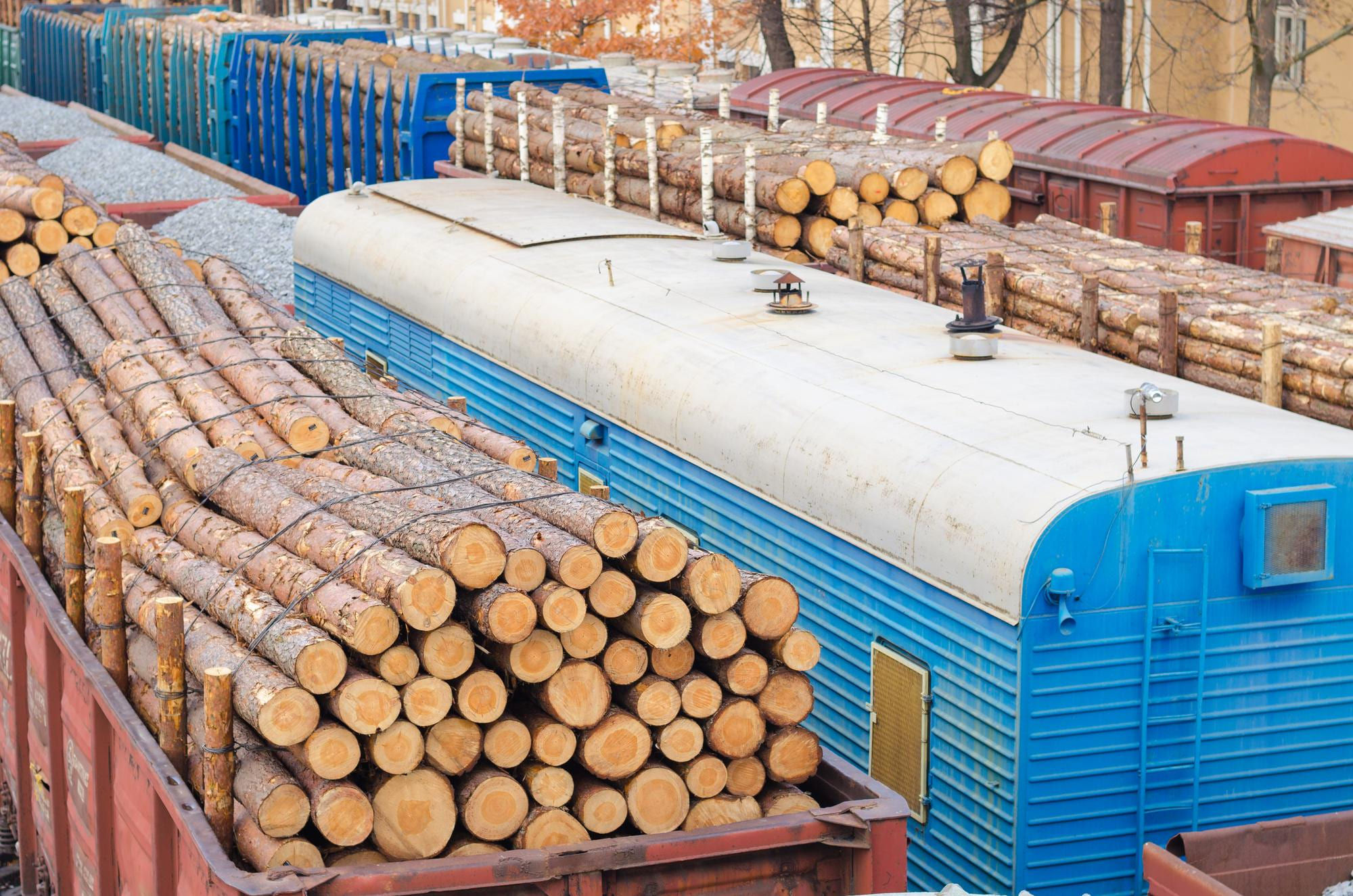
Why Russian Wood Processing Is Attractive to a Foreign Investor
Finnish technologists have left, German equipment is no longer being supplied, and European partners in joint projects have wound down their presence. Russia’s forest industry has undergone large-scale upheaval in recent years, resulting in niches that just a few years ago were firmly occupied.
Russia ranks first in the world in terms of forest land area — approximately 815 million hectares, which amounts to roughly 20% of all global forest resources. The wood processing industry built on such a resource foundation is an industry with a colossal potential for deep processing, which Russia is currently realising only in part. Timber exports have historically gone predominantly in the form of first- and second-stage processed products: boards, beams, and rough blanks. High added-value products — CLT panels, LVL timber, and glued structures — occupied a modest share of the overall volume.
For a foreign investor, this is a specific unfilled niche. Raw materials are in abundance. Production capacity for deep processing is lacking. The sales market in China is 2–5 days of logistics away from enterprises in Siberia and the Far East. Such a combination is rarely encountered.
Russian President Vladimir Putin, back in 2020, instructed that a complete ban on the export of unprocessed softwood and valuable hardwood timber be introduced from 1 January 2022. This decision became the turning point for the industry: the timber industry complex is compelled to create processing capacity within the country. And to create means to attract capital, technologies, and partners.
The Industry in Numbers: Market Conditions in 2025–2026
The picture at the end of 2025 is ambiguous but interesting for the investor. The total volume of sawn timber exports from Russia grew by 5% — to approximately 24 million cubic metres, as reported by Rosleshoz. China remains the largest buyer: its share accounted for more than half of all shipments — around 13.4 million cubic metres. However, in value terms, according to data from China’s General Administration of Customs, shipments amounted to $2.38 billion versus $2.6 billion in 2024. A decline in prices alongside growth in physical volumes is a signal of pressure on margins in the lower segments, and simultaneously an argument in favour of products with higher added value.
According to expert estimates, the share of the timber industry complex (LPK) in Russia’s GDP is around 1%, with annual production volumes exceeding 2.8 trillion roubles. The timber industry complex of the Russian Federation includes sawn timber, pulp-and-paper products, plywood, boards, pellets, and the production of paper and cardboard. At the same time, the timber industry complex does not yet play a role in Russia’s economy commensurate with the country’s resource potential: a significant portion of production capacity in the eastern regions is underutilised. Both domestic timber industrialists and foreign investors see this sector as a point of growth.
The investment dynamics in the timber industry complex in the Far East are telling: 88 residents of preferential regimes (TOR, SPV, and AZRF) are implementing projects in the forestry sector here, with a total investment volume of 120 billion roubles. Of these, 34 billion roubles have actually been invested, and 43 projects have been launched. The development strategy for Russia’s forest industry is directly oriented towards a significant strengthening of Russia’s position in global trade — through high-stage processed products, not raw materials. Expanding the production of finished wood processing products is the main benchmark for new investment projects.
Key Product Segments: Where There Is Potential for Entry
Not all market positions are equally open. The raw timber segment is closed by prohibitive duties. Simple sawn timber is a competitive environment with strong domestic producers. So where is the real point of entry?
A quick start with moderate investment is offered by the production of kiln-dried (KD) sawn timber: Chinese demand is stable, and drying capacity in the eastern regions is chronically lacking. A higher long-term potential lies in the deep processing segments:
LVL timber and CLT panels — structural materials for construction, actively used in China but produced in Russia in very limited volumes. The technological barrier to entry is higher — and the profitability is correspondingly so.
Wood pellets — export demand in China and South Korea is stable, the production cycle is relatively straightforward, and the investment threshold is lower than in other segments. Based on the results of 2025, sales of wood fuel in Russia grew by 3%, to 7.7 million tonnes.
Birch plywood — production in Russia in 2024 grew by 5%, to 3.4 million cubic metres; the forecast for 2025 is 3.7 million cubic metres, of which up to 45% is directed to external markets. Russia remains the largest plywood supplier to China.
The introduction of the ban on the export of roundwood exerted direct pressure on the formation of these niches: raw material remained inside the country — and it needs to be processed. The competition now is for technologies and sales markets, not for access to timber.
Format Overview: Which Path to Choose

Before choosing a specific scheme — a brief note on the architecture of solutions. Foreign investments in the timber industry complex are, as a rule, implemented through one of four formats: a trade partnership, a joint venture (JV), one’s own Russian legal entity, or the acquisition of an operating business (M&A).
Each investment path has its own logic. Some investors want to test the market with minimal risk. Others want to immediately control production and the technological process. Still others come with capital for a specific asset. The following four sections examine each format in substance.
Format 1. Trade Partnership and Contract Manufacturing
Zero barrier to entry — perhaps the best way to describe this format. A foreign company does not register a limited liability company in Russia and does not take on operational risks. Instead — a contract with a Russian producer.
Three main options: an offtake agreement (an obligation to purchase a certain volume of products at a pre-fixed price), tolling processing of timber (you supply the raw material — the enterprise processes it for a fee), or the status of exclusive distributor with a preferential right to the sawn timber of a specific timber industrialist.
A typical scenario for a Chinese company: an offtake agreement with a Siberian plant for 30,000–50,000 m³ of KD sawn timber per year, ensuring the producer’s capacity utilisation and a predictable supply for the buyer. Start-up financing is minimal; risks are manageable.
However, the limitation is obvious: you manage neither quality nor the production process. Dependence on the partner is high, and this must be honestly accounted for in planning.
Format 2. Joint Venture with a Russian Producer
A JV is the golden mean between ease of entry and real operational control. In Russian law, a joint venture is most often structured as a limited liability company, where the shares are distributed between the Russian and foreign participants.
Why is 49% a strategically smart choice? A foreign participant’s share below 50% takes the enterprise outside the scope of enhanced scrutiny by the Government Commission on Foreign Investments, reducing the regulatory burden and accelerating launch. However, a minority stake does not mean an absence of influence: the shareholders’ agreement can fix the Chinese side’s right to appoint the Chief Financial Officer and the Chief Process Engineer — those who make the key decisions on a daily basis.
A precedent already exists. Russia Forest Products (RFP) was established with the participation of the Russian-Chinese Investment Fund, with an investment volume of 12 billion roubles. The enterprise in Khabarovsk Krai produces dry sawn timber and works for export to China — exactly the model that new investors are considering.
Under the double taxation avoidance agreement between the Russian Federation and China, dividends are taxed at a rate of 10%. Settlements in yuan through Russian partner banks significantly simplify the repatriation of profits.
Format 3. Opening a Subsidiary (LLC or JSC) in Russia
Full operational control without a Russian partner — that is precisely what most often brings people to the format of their own legal entity. An LLC is preferable to a JSC in this case: the management structure is simpler, there are fewer corporate procedures, and it is sufficient for a production business of any scale.
What does registration look like in practice? The foreign founder submits documents to the Federal Tax Service: the charter, the resolution on establishment, and notarially certified translations of the foreign participant’s documents. The minimum authorised capital for an LLC is 10,000 roubles; the registration period is 3 working days. Russian law does not impose restrictions on the size of a foreign participant’s share in most production industries, including wood processing.
For Chinese investors, there is an important nuance here: Russia, within the framework of developing relations with friendly countries, has simplified a number of procedures. In several regions of the Far East, it is possible to register a company through the Multifunctional Centre (MFC) on a one-stop-shop basis without the founder’s personal presence — provided a proper power of attorney is in place.
What is worth thinking through in advance:
Lease of a forest plot. A foreign company registered as a Russian LLC can lease forest fund land on general terms — for a period of up to 49 years. Restrictions apply only to strategic plots.
Currency control. The importation of capital into the authorised fund is recorded by the bank and is not subject to tax. The withdrawal of profits requires compliance with currency legislation — the practice of settling in yuan significantly simplifies the logic here.
Accounting under RSBU standards. Russian accounting standards are mandatory; a qualified Chief Accountant or an outsourcing company will be required.
Format 4. Purchase of a Stake or Acquisition of an Operating Enterprise (M&A)
A production asset with an operating forest plot, equipment, and personnel — the path for an investor for whom speed is important. Instead of building from scratch, you acquire an operating timber industry complex, even if it requires modernisation.
The market currently has a number of medium-sized enterprises that are open to attracting foreign capital. The reason is simple: European technological equipment has stopped being serviced, and there are insufficient own resources for retooling production capacities. This is precisely where a Chinese investor with access to equipment and an export market becomes a valuable partner.
Due diligence in the sector has its own specifics. Three things are checked first and foremost: the legal status of the forest plot (the lease agreement, its term, the presence of debts to the forestry authority), the enterprise’s environmental obligations, and the actual condition of the equipment. Financial statements are analysed for a minimum of 3 years.
The regulatory moment that is daunting but manageable: transactions as a result of which a foreign investor acquires more than 25% in an enterprise operating on a strategic forest plot require the approval of the Government Commission on Foreign Investments (GCI). The review period is up to 3 months. The majority of standard wood processing operations do not fall under the concept of «strategic» — this is important to understand from the very outset.
Legal Framework: What You Need to Know Before Entering
Federal Law on Foreign Investments (No. 160-FZ) guarantees the foreign investor equal rights with Russian market participants, protection against nationalisation, and stability of the tax regime for the period of the project’s payback. Wood processing industry in most of its segments is not included in the list of strategic industries — which means that no special permits are required for entry.
Restrictions that genuinely exist: the lease of forest fund land is only possible for Russian legal entities — hence the necessity of registering an LLC in Russia. Direct leasing of plots by a foreign company without a Russian legal entity is not possible. But this structure is easily resolved through the formats described above.
Practical advice from G2R: structuring a transaction — whether a JV, LLC, or M&A — is best done with a lawyer who has experience in both jurisdictions. Chinese-Russian investment transactions have their own specifics in terms of corporate and currency law, which it is difficult to anticipate unilaterally.
Benefits and Special Regimes: TOR, SPV, and SPIK
This is where the investment calculation becomes obvious. The state has a direct interest in developing the forestry complex in the Far East and Siberia — and backs this interest with concrete figures.
A resident of a Territory of Advanced Development (TOR) receives:
- Corporate income tax of 0% for the first 5 years.
- After the preferential period ends, a reduced regional rate is maintained for up to 10 years — the final tax burden depends on the specific region and the date of conclusion of the agreement with the management company.
- Insurance contributions are reduced to 7.6%.
- Land tax — 0% for the first 3–5 years.
- Property tax — 0% for the first five years.
TORs with wood processing residents operate in Khabarovsk Krai («Khabarovsk», «Komsomolsk»), Amur Oblast, the Republic of Sakha, and Primorsky Krai («Mikhailovsky»).
The Free Port of Vladivostok (SPV) extends across the entire south of Primorye and offers a comparable tax package. According to 2025 data, more than half of the residents of preferential regimes implementing forest projects in the Far East are participants of the SPV. An additional advantage for foreign partners is a simplified visa regime for employees and business visitors from friendly countries, including China.
The SPIK — a special investment contract with the Government of the Russian Federation — is an instrument for large projects. It allows tax conditions to be fixed for a period of up to 20 years. For a long-term investment project in the timber industry complex, this is not an option but a genuine insurance policy against changes in the rules of the game. Financing of large investment projects through the SPIK is often combined with subsidised rates from the Industrial Development Fund.
Risks and How to Mitigate Them: An Honest View
The Russian timber industry complex is attractive — but one should not invest with eyes closed. Four real risks that need to be known in advance.
Currency restrictions. International settlements have become more complicated. However, settlements in yuan through Russian banks with a Chinese licence are already a working scheme that timber industrialists actively use. This is not a workaround but an officially operating mechanism.
Equipment. A number of Western wood processing equipment manufacturers have restricted supplies. However, Chinese manufacturers are already occupying the vacated space: according to industry sources, wholesale sales of machinery and equipment for timber harvesting in 2025 grew by 24%, to 2.1 billion roubles — a significant portion of this growth was provided by Chinese machinery.
Personnel. There is a shortage of qualified CNC operators and wood processing engineers in the regions of Siberia and the Far East. The solution is to attract Chinese specialists under work quotas or to retrain local personnel, which is also supported by state programmes.
Legal dynamics. Forest legislation is periodically amended. This is precisely where the SPIK fulfils its main function: it fixes the conditions for the entire horizon of production expansion. Those who operate without such protection take the regulatory risk upon themselves.
Step-by-Step Plan: Where to Begin
Regardless of the chosen format, the path to the first transaction or production launch fits into several sequential steps.
Step 1. Choosing a niche and region — 2–4 weeks. KD sawn timber or pellets for a quick start; LVL/CLT — for a long-term project. Khabarovsk Krai and Primorye are optimal in terms of export logistics to China through sea ports.
Step 2. Finding a partner or target — 1–3 months. B2B platforms, tender platforms, industry associations of timber industrialists.
Step 3. Preliminary due diligence — 3–5 weeks. Priority: status of the forest plot, financial statements for 3 years, environmental obligations.
Step 4. Choosing a legal structure — in parallel with the previous step. Trade contract, JV, LLC, or M&A — with a legal adviser familiar with both jurisdictions.
Step 5. Registration of the legal entity or execution of the contract — from 2 weeks (LLC) to 3 months (M&A with GCI approval).
Step 6. Application for TOR or SPV resident status when locating in the Far East. The benefits are fixed in the agreement with the management company.
Step 7. Opening an account in roubles and yuan, building the logistics chain to the ports of shipment.
Mistakes are most often made at the first and third steps: logistics costs are incorrectly estimated, or hidden encumbrances on the forest plot are missed. Both points are correctable if one does not rush.
How the G2R Platform Helps to Enter the Wood Processing Market
One of the key difficulties for a foreign entrepreneur is finding a reliable Russian partner without a physical presence in the country. Personal trips are useful, but the decision is made before the ticket is purchased.
G2R is a B2B platform oriented towards the export of goods and services. The catalogue of product direction cards for sawn timber, plywood, pellets, LVL timber, and related products operates in Russian, English, Chinese, and Thai. A built-in AI translator allows direct chat with the supplier without a language barrier. The tender platform helps find contract opportunities, not limited to the catalogue.
The platform operates on a success-fee model: the commission is charged only after the closing of the transaction. This removes the question of «what are we paying for when nothing has happened yet» — the investor pays for the result, as does the producer.
For those who regard a trade partnership as the first step before deeper entry into the industry, the G2R platform is a logical starting point. The Russian timber industry sector in 2026 is at a point where the resource is there, the sales markets have reoriented to the east, and the technological and investment gap is only widening. This window will not remain open indefinitely.