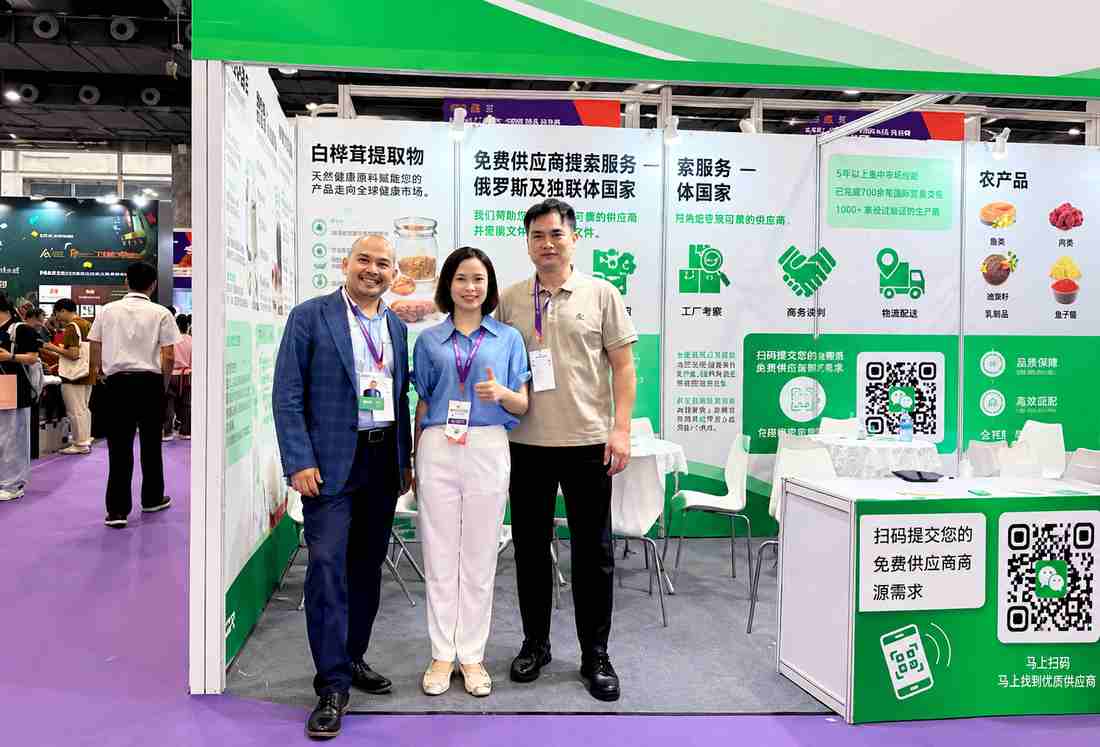
Let’s immerse ourselves in the exhibition process and imagine the final day. In the morning, the stand is still full of visitors, product samples are beautifully displayed, and managers are collecting contact details and business cards from potential Russian buyers.
Just a few hours later, everything changes: the dismantling of exhibition structures begins, and by the next day, only photographs, boxes, and a list of contacts remain as reminders of the event. For a traditional exhibition service provider, the project is complete. It’s time to relax. But not for sales managers! For them, the most crucial stage is just beginning!
Why Are Three Days at a Trade Show Not Enough?
At an exhibition, we witness a unique situation. Although several hundred companies from the same industry may be within arm’s reach, buyers rarely make a purchasing decision or sign a contract within the few minutes they spend at a stand talking to managers.
Why does this happen? What does a Chinese buyer want to know?
They need to:
— verify the company;
— understand the pricing;
— obtain product specifications;
— evaluate the packaging;
— find out the MOQ;
— check whether importing the product is possible;
— show a sample to their manager or customer;
— compare your company with other suppliers;
— sometimes conduct product testing;
— agree on logistics and payment terms.
Therefore, signing a contract is never the main result of participating in a trade show. The main result is the opportunity to continue communicating with the buyer. And this opportunity can quickly disappear if negotiations are not resumed within the first few days after the event.
The G2R Model: 90 Days After the Trade Show
We integrate collective exhibition stands for Chinese manufacturers in Russia into an export process that begins at the exhibition venue and continues after the event.
During the first three days, we recommend collecting not just business cards, but context. Every contact should provide answers to the following questions:
- Who is this person?
- What company do they represent?
- What type of business is it?
- Which product are they interested in?
- Does the company engage in imports?
- What is the next step?
- Is a sample required?
- When should we follow up with a response?
Exhibition visitors often like to say, «Very interesting, contact me after the exhibition.» This phrase means nothing unless the questions above have been answered. Therefore, the stand team’s task is to record how communication with each contact should continue.
Within the first 10 days after the exhibition, all collected contacts must be qualified.
For example:
A — A specific commercial inquiry.
B — A relevant potential buyer without an immediate inquiry.
C — A strategic partner: marketplace, chamber of commerce, exhibition operator, media outlet, or platform.
D — A service partner.
E — A non-target contact.
Thanks to this contact ranking system, exhibition participants receive a clear sales funnel for further negotiations and sales.
During the first 14 days after the exhibition, the most important task is to make the first follow-up contact with a potential buyer or partner. The most dangerous mistake is postponing communication.
During this same period, Chinese buyers receive enormous numbers of messages, phone calls, and emails from other exhibitors.
Therefore, follow-up communication should begin quickly and refer to the context of the previous conversation. We have prepared examples of phrases that should be used to start these conversations:
«You asked about…»
«We discussed the volume…»
«You requested a sample…»
«We are sending the specifications…»
Starting a follow-up with such specific phrases sounds much more relevant to the buyer than a generic mass message saying, «Thank you for visiting our stand.»
Next comes the period from 7 to 30 days after the exhibition. At this stage, it is important to keep product samples in China. This is one of the key requirements of G2R’s exhibition operating model.
If a sample remains in Russia, it can be shipped to a new potential buyer or partner through domestic delivery services. If the product has been returned to Russia, every new request creates the need for additional international shipping expenses.
The G2R platform has access to warehousing infrastructure throughout Russia. The ability to store samples in China makes it possible to continue using them as a sales tool for weeks and months after the exhibition.
The following 45 days after the exhibition are a time for active negotiations. When a potential buyer or partner begins responding and asking additional questions, the real export work begins.
What issues does a potential buyer usually discuss?
- Price
- MOQ
- Packaging
- Labeling
- Certification
- Logistics
- Production lead time
- Exclusivity
- Territory
- Payment
- Pilot shipment
It is worth noting that at this stage, a traditional exhibition contractor is no longer involved, and specialists from the exporting company need to step in. But that is not how G2R works! We remain involved in the process and provide assistance at every subsequent stage until the buyer receives the goods in their city.
At the same time, the Chinese manufacturer remains responsible for the product and commercial decisions. Our Russian team helps maintain communication with potential buyers or partners, structure their inquiries, and move the negotiation process forward.
Over the following 60 days, the focus shifts to organizing the search for partners beyond the exhibition. The advantage is that the exhibition provides a view of the market, but it does not represent the entire market.
After several dozen negotiations and meetings, it becomes clearer:
— who purchases this product category;
— which arguments are effective;
— which questions are repeatedly asked;
— what prices are considered acceptable;
— what type of partner is needed.
Based on the experience already gained, it becomes possible to continue a targeted search for companies that did not attend the exhibition. In this way, the exhibition becomes a source of data for further partner development.
Over the following 90 days after the exhibition, we move to the digital communication stage. A brand should not disappear after the event.
Negotiations can continue through the most popular channels in Russia:
— MAX, Telegram, VKontakte;
— product listings;
— B2B marketplaces;
— industry-specific content;
— Chinese short-video and livestreaming platforms for suitable product categories;
— follow-up presentations and online meetings.
It should be emphasized that digital promotion does not replace B2B negotiations. It is an excellent opportunity to maintain product visibility and create additional touchpoints with potential buyers and partners.
What Does a Chinese Company Receive After Participating in a Trade Show in Russia?
After participating in an exhibition at a G2R collective stand, a Chinese manufacturer receives not just a standard participation report, but a real step-by-step roadmap for organizing exports to Russia.
In particular, the document will contain:
- Contact.
- Qualification.
- Next step.
- Sample.
- Commercial offer.
- Negotiations.
- Pilot shipment.
- Contract.
It is worth noting that not every contact goes through the entire process, and not every business card promises a deal. However, the G2R team can ensure that no promising contact is lost simply because the exhibition has ended.
Is It Necessary to Fly to Russia for the Exhibition?
G2R’s collective exhibition stand participation offer allows companies to participate remotely, without sending the Russian team on a business trip. Before booking space at the stand, we check the rules of the specific exhibition, the characteristics of the product, and its prospects in the Chinese market.
Travel is necessary only when personal presence has commercial value.
Why Is a G2R Collective Stand Cost-Effective?
We are putting all our cards on the table and increasing transparency throughout the entire process. On the Russian side of the project, the company ООО «АзияЭксперт» (AsiaExpert LLC) is responsible for operations. On the Chinese side, the company is GUANGZHOU SEVEN WINDS INTERNATIONAL TRADE CO., LTD.
The Russian company is connected to local business communities through Chambers of Commerce and Industry and the all-Russian small and medium-sized business organization OPORA RUSSIA. The project also has access to warehousing infrastructure in several Russian cities. In addition, the G2R platform is used as a digital B2B infrastructure.
Three Components of G2R’s Offering:
PHYSICAL:
Stand + products + warehouse + samples.
COMMERCIAL:
Contacts + buyer search + negotiations + ongoing support.
DIGITAL:
Product listings + messengers + content + Chinese platforms, where appropriate for the product.
With this approach, the exhibition is no longer a standalone event. It becomes the starting point for exports.
To summarize, it is possible to have a perfect exhibition stand and, a month later, no longer remember the names or inquiries of the visitors. Alternatively, you can use a collective stand and establish a process that continues working for 90 days after the event.
Planning to Participate in a Trade Show in Russia?
Send us information about your product or a link to your catalog.
We will propose:
— suitable trade shows;
— a collective participation format;
— a participation model without sending the Russian team on a business trip;
— a lead management plan;
— a plan for storing and shipping samples after the exhibition;
— a format for further buyer searches and negotiations.